How to Deploy Machine Learning Solutions in Hospitality Without Disrupting Daily Operations
Learn to deploy machine learning in hospitality using phased rollouts and data pipelines. Covers demand forecasting,...
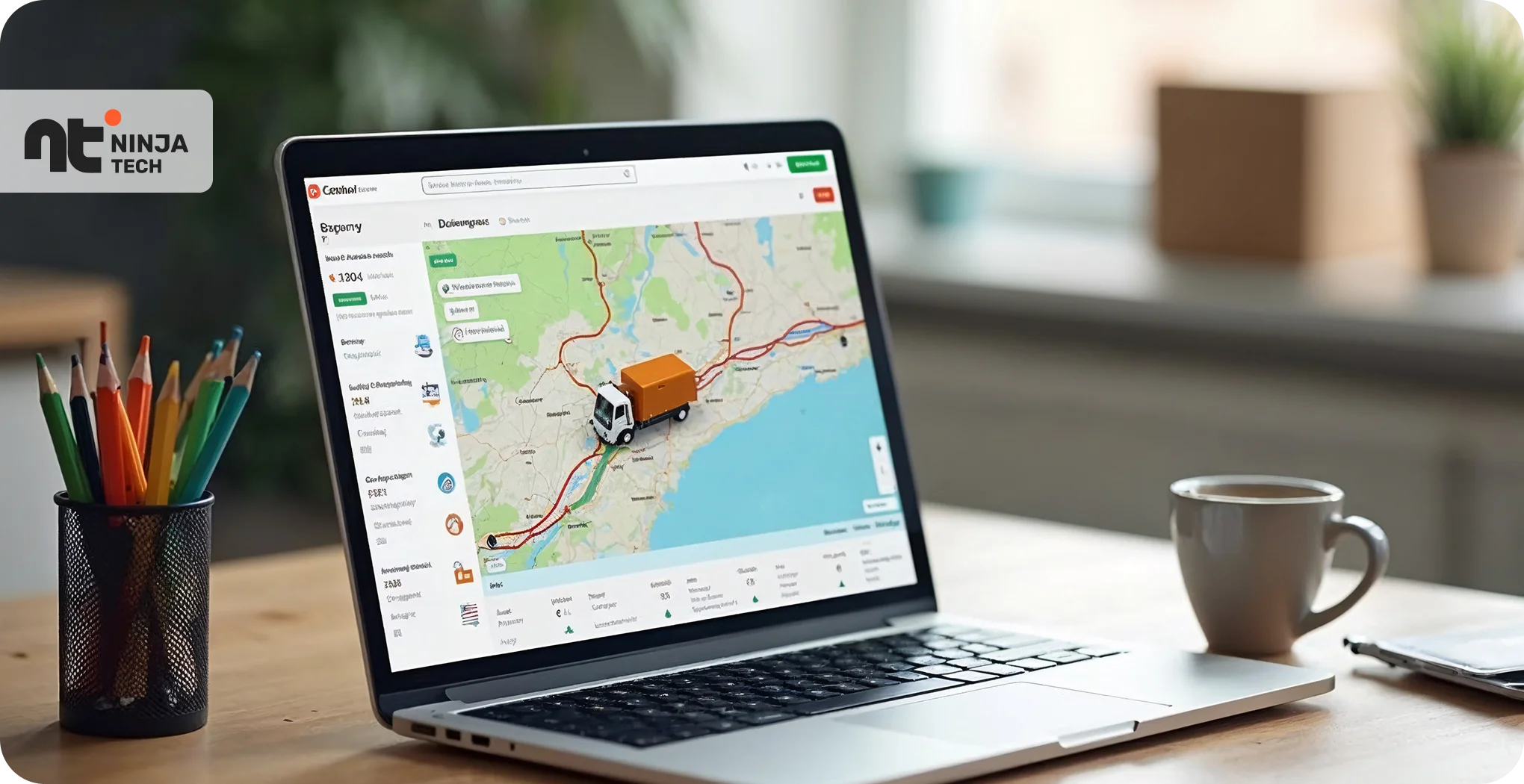
The global vessel tracking market is on pace to surpass $3.5 billion by 2030 — and the companies best positioned to capture that growth aren’t necessarily the ones with the biggest engineering departments. They’re the ones that figured out how to build faster with smaller, sharper teams.
The short answer to the question this title asks: you don’t need a 20-person team to ship a production-ready vessel tracking platform. You need the right team structure — one that pairs experienced developers with AI tools to close skill gaps without inflating your burn rate. The result — what the field now calls an AI-powered software development team — is a lean group that ships faster by working smarter, not by adding headcount. That’s the core idea behind AI developer staff augmentation, and it’s changing how maritime tech companies move from concept to product.
This post covers what that model looks like in practice, how to structure your team around it, and the build sequence that actually gets you to a working platform.
Most people underestimate the complexity here. On the surface, vessel tracking sounds straightforward: collect GPS coordinates, plot dots on a map, send alerts. But once you’re actually building it, you run into a stack of interconnected problems that most generalist developers aren’t equipped to handle.
The technical requirements are specific:
The skill overlap you need — full-stack development, real-time data streaming, geospatial engineering, and some maritime domain knowledge — is genuinely rare. I’ve seen teams spend three months recruiting for a senior engineer with PostGIS experience, only to watch that person spend their first six weeks learning how AIS messages are structured.
It’s not a talent problem, exactly. It’s a specificity problem. And that’s where team structure becomes the lever worth pulling.
Staff augmentation isn’t outsourcing. That distinction matters.
When you outsource, you hand off a scope and receive deliverables. You’re often the last to understand what was built or why. With staff augmentation, the developers you bring on work inside your team — your Slack, your sprints, your architecture decisions. You own the process.
An AI-powered software development team is a group of engineers who work inside your organization’s workflows — your sprints, your architecture calls, your codebase — while using AI tools to multiply their throughput on defined tasks. It doesn’t mean replacing developers with bots. It means giving experienced engineers tools — code generation, automated testing, documentation assistance, performance profiling — that compress what used to take days into hours.
| Staff Augmentation | Traditional Outsourcing | |
|---|---|---|
| Code ownership | You | Vendor |
| Architecture decisions | Your team | Vendor-driven |
| Sprint integration | Yes | Rarely |
| Visibility into process | High | Low |
| Flexibility to scale | High | Limited |
The math is hard to argue with. Hiring two senior full-stack engineers in-house — with equity, benefits, and a three-month ramp — can run $400K or more annually before you’ve shipped a single production feature. Dedicated developers for startups, brought in through an augmentation model, typically cut that cost significantly while compressing your time-to-MVP.
And unlike a one-off outsourcing contract, augmented developers become a genuine extension of your team. They’re not guessing at your goals — they’re inside them.
The team configuration that works in practice for most maritime tech companies is smaller than engineers tend to recommend in theory.
At the early stage, you want to hire full-stack developers who can move across the stack without needing a backend handoff for every UI change. Separate frontend and backend specialists make sense once the product is defined and you’re optimizing specific layers — not when you’re still figuring out what the product needs to do.
The exceptions are geospatial and streaming infrastructure specialists. Those are worth bringing in early if your vessel density or alert volume is unusually high. Otherwise, a capable full-stack developer with solid AI tooling will outpace a narrow specialist in the first six months of a build.
Here’s what I’ve seen work: pair mid-level developers with strong AI tooling and you often get output that matches a senior engineer on well-defined tasks — schema migrations, test coverage, API boilerplate, documentation. That frees your senior talent for the hard architectural decisions that can’t be automated.
So a team of four — two augmented mid-level developers, one senior backend lead, one DevOps — can build what used to require eight people. Not always. But often enough that it’s worth structuring for.
This isn’t meant to be an exhaustive technical tutorial. But here’s the decision sequence that actually matters.
The two main AIS data patterns are WebSocket streams (lower latency, more infrastructure complexity) and REST polling (simpler to start, eventually limiting at scale). For most startups, REST polling with a migration plan is the right call.
On the database side, PostGIS on PostgreSQL handles most geospatial needs well. TimescaleDB is worth evaluating if you expect heavy time-series query loads. AI tools can generate solid schema drafts and migration scripts from a plain-English requirements description — this alone can save several days of back-and-forth.
Set up your AIS feed connectors — commercial providers like Spire Maritime or exactEarth, or self-hosted NMEA decoders if you’re capturing from local receivers. Then build normalization logic, because vessel data arrives inconsistently formatted across sources and your pipeline needs to handle that gracefully.
This is where AI-assisted code generation earns its keep. ETL work is repetitive and well-structured — exactly the type that AI tools handle well. Your senior developer reviews output and focuses on edge cases rather than writing every transformation by hand.
Mapbox, Leaflet, and deck.gl are the common choices. Mapbox has the best out-of-the-box maritime styling; deck.gl handles large-scale vessel overlays better at high vessel density. The right pick depends on your expected vessel count and your team’s JavaScript depth.
Build vessel position overlays first, then route history trails, then geofence alert visualizations. That order matters — each layer builds on data assumptions from the one before it. AI tools are useful for component scaffolding and layout testing, which frees your developers to focus on the parts that actually require judgment.
Configure threshold-based alerts — speed anomalies, zone entry and exit, extended inactivity, ETA variance. Then build your reporting layer (exportable CSVs and PDFs are usually table stakes for maritime clients) and expose a RESTful or GraphQL API for client integrations.
Automated test generation keeps coverage high on the alerting logic specifically. This matters more than most teams expect: alerting is exactly the type of code that breaks silently in production without solid test coverage.
A few KPIs worth tracking from week one:
Signs you’ve outgrown your startup configuration usually look like one of two things: the team ships fast but accumulates technical debt slowing future work, or you’re hitting geospatial performance limits that require specialist expertise. When that happens, you don’t necessarily need to overhaul the team — you might add one specialist while keeping your AI-augmented developers on the surrounding product work.
That selective scaling is one of the real advantages of the augmentation model. You’re adding capacity to an existing structure, not rebuilding from scratch — which means dedicated developers for startups can join, contribute immediately, and scale back out without disrupting what’s already working.
Maritime tech startups and mid-size companies building their first vessel tracking product benefit most. But the model also works well for established shipping companies bringing development in-house for the first time. The common thread is organizations that need specialized developer capacity quickly without committing to a large permanent headcount.
A focused team of four to six developers can typically ship a functional MVP — live vessel positions, basic alerts, a dashboard — in eight to twelve weeks. That timeline assumes clean AIS data access and a defined feature scope. Scope creep and unclear data requirements are the two things that consistently blow it up.
Dedicated developers work within your team structure on a committed, ongoing basis — typically full-time or close to it. Freelancers tend to operate project-to-project with less continuity. For vessel tracking development specifically, continuity matters: the codebase accumulates domain context that’s hard to transfer, and institutional knowledge about your data sources and client requirements becomes genuinely valuable over time.
Not yet, and probably not soon. AI tools are strong at code generation, testing, and documentation — the execution layer. But decisions about data modeling, alert thresholds, and geofence logic require someone who understands how vessels actually behave and what maritime operators care about. The better framing is that AI augmentation reduces the number of specialists you need, not that it eliminates domain knowledge as a requirement entirely.
Vessel tracking software is hard to build well. The technical requirements are specific, the talent is scarce, and the margin for error on a live operational system is thin. But none of that means you need 18 months and a large in-house team before you can ship.
The companies moving fastest right now are structuring small teams thoughtfully — pairing senior talent with AI-assisted developers who execute at high velocity on well-defined work. Start with your data architecture, be realistic about the roles you actually need versus the roles that sound good on paper, and find an augmentation partner whose developers have worked on real-time data systems before.
If you’re scoping out a vessel tracking build, bring in a staff augmentation partner before the architecture decisions are locked — not after. That’s when their input is most valuable, and where you’ll avoid the team configuration mistakes that slow most builds down.

Learn to deploy machine learning in hospitality using phased rollouts and data pipelines. Covers demand forecasting,...

Retail AI costs more than vendor quotes suggest. Discover the compute, MLOps tooling, and retraining costs...
Tell us about your product, platform, or business software requirement. We will suggest the right team structure, roadmap, and engagement model within 48 hours.