AI & ML
In-House Developers vs. Hire Dedicated Developers: Which Model Fits Your AI Project?
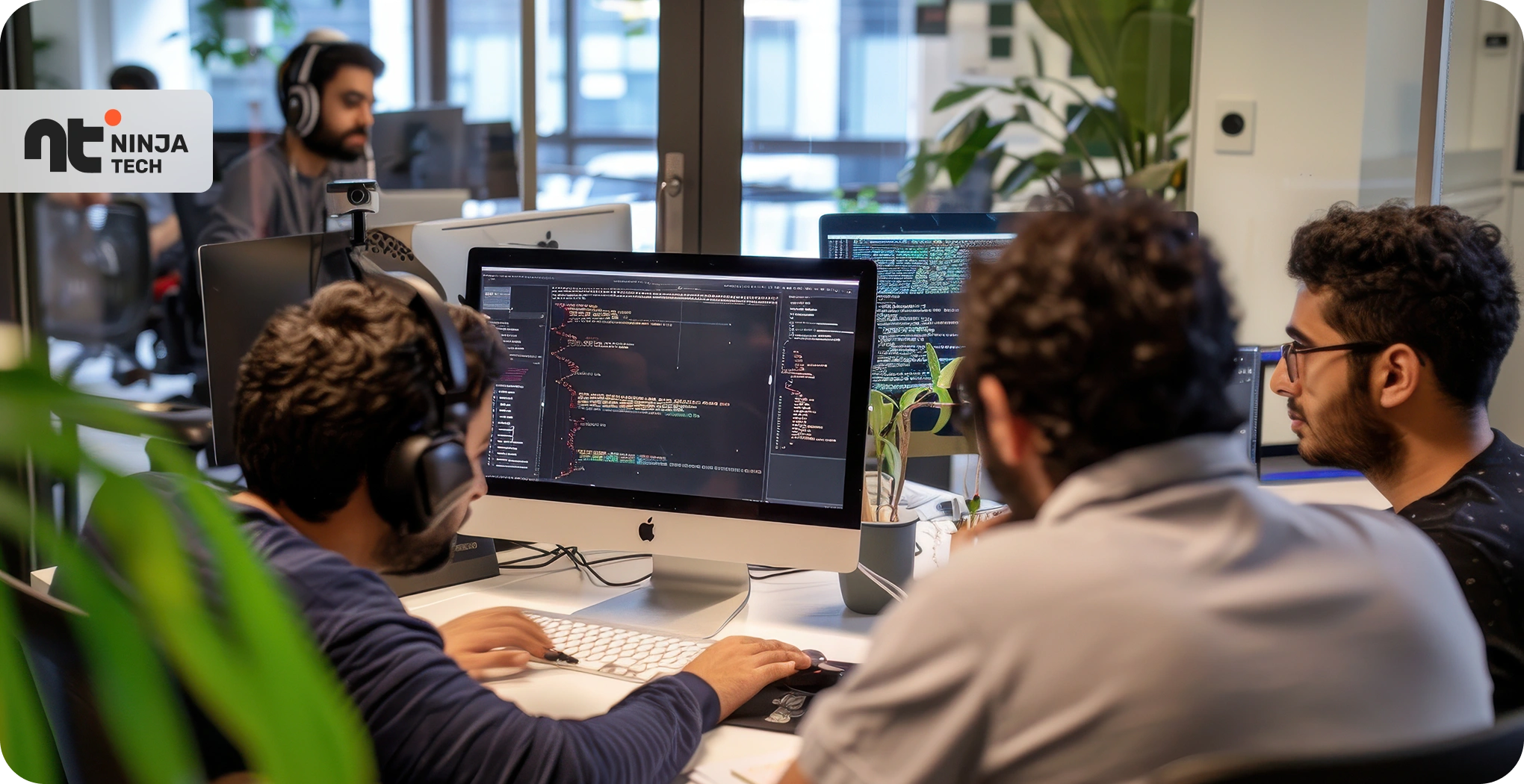
AI hiring decisions are breaking more projects than bad code ever will. The right team structure — whether you hire dedicated AI developers or build in-house — determines whether your AI initiative ships in 90 days or stalls in an 18-month recruiting cycle. That distinction, made before you commit, is what separates teams that ship from teams that spiral.
By the end of this post, you’ll have a clear, practical framework for choosing between building an in-house AI team and working with dedicated developers — with a realistic read on cost, speed, and what each model actually delivers.
What AI Projects Actually Demand (And Why the Hiring Decision Matters More Than You Think)
AI Is Not Standard Software Development
Building a web application and building an AI product are not the same discipline. A traditional dev team can ship a CRUD application following established patterns. An AI project requires ML engineers, data scientists, NLP specialists, and increasingly, prompt engineers — roles that didn’t exist in most companies’ org charts five years ago.
Consider what an eCommerce company building AI eCommerce personalization software actually needs: someone to design the recommendation model, someone to build the data pipeline feeding it, someone to evaluate model outputs for quality and bias, and a product engineer to integrate everything into the storefront. That’s four distinct specializations. Most internal teams have none of them.
The iterative nature of AI compounds this. Unlike traditional development where features ship and stabilize, AI models require ongoing training cycles, revalidation, and continuous tuning. The work doesn’t end at launch.
The Talent Gap Is Real — and It’s Getting Worse
Industry estimates suggest there are roughly three open AI/ML roles for every qualified candidate in the US market. LinkedIn’s Workforce Reports have consistently flagged AI and ML specialists among the fastest-growing and hardest-to-fill positions globally.
This isn’t a temporary blip. The shortage is structural. Which is exactly why hiring dedicated AI developers — rather than competing in an overheated recruiting market — has become so attractive for product teams that need to move.
The In-House Developer Model — What It Gets Right, and Where It Falls Short
Where an Internal Team Has a Real Advantage
There’s a genuine argument for building internally, and it shouldn’t be dismissed.
Your in-house engineers know your product, your customers, and your data. They’ve sat through the strategy meetings. They understand why the product works the way it does — not just how. That context is hard to transfer to an external team, and for long-lived AI systems embedded in compliance-heavy workflows, or trained on proprietary data, that institutional knowledge pays off over years, not quarters.
For large enterprises running AI as the core of their product (not a feature, the product), an internal team makes sense. Healthcare companies handling patient data, fintech firms under strict regulatory frameworks — these organizations often can’t route sensitive data through third-party developers without significant legal exposure. For them, in-house isn’t a preference. It’s a constraint.
The Real Costs of Going In-House
Here’s where the math gets sobering.
The average base salary for an AI/ML engineer in the United States sits between $150,000 and $200,000 annually — before benefits, equity, recruiting fees, and the six-to-nine months of onboarding before they’re fully productive on your specific stack. Hire three specialists to cover the minimum viable AI team and you’re looking at north of $600,000 in annual personnel costs before a single model is trained.
Then there’s recruiting time. Three to six months is typical for a specialized AI hire. And if you lose someone mid-project — which happens regularly in a market where top AI talent fields multiple offers monthly — you’re not just replacing a headcount. You’re losing months of embedded context that can’t be easily rebuilt.
Scalability Is the Ceiling
An internal team works at fixed capacity. When a project needs a surge — a major retraining push, an integration sprint before launch — you can’t quickly bring on three AI engineers and release them once the pressure eases.
Industry research suggests replacing a specialized tech employee costs between 50% and 200% of their annual salary when you factor in lost productivity, recruiting, and ramp time. That churn risk is real. In AI specifically, it hits harder — because the skills you’re replacing are harder to find in the first place.
The Dedicated Developer Model — Flexibility Without Compromising Depth
What “Dedicated Developers” Actually Means
There’s a common misconception worth clearing up: dedicated developers are not freelancers, and they’re not body-shopping arrangements where a vendor sends whoever happens to be available.
A true dedicated model means a committed team — assembled specifically around your project’s technical requirements — working exclusively on your engagement. The team stays stable across the project, builds context over time, and operates as an extension of your internal product team. The key structural difference? You’re not carrying the overhead, and you can scale the engagement when scope changes.
When you compare dedicated software developers vs in-house teams on pure flexibility, dedicated wins. And that flexibility doesn’t come from cutting quality corners — it comes from a fundamentally different engagement model.
Speed, Cost, and Expertise on Demand
The time-to-productivity difference is stark.
| Dimension | In-House Team | Dedicated Developers |
|---|---|---|
| Time to Start | 3–6 months | 2–4 weeks |
| Annual Cost (3-person AI team, US) | $600K+ | $150K–$300K |
| AI Expertise | Built over time | Pre-vetted from day one |
| Scalability | Limited by headcount | Adjusts with project scope |
| Long-Term IP Control | Full | Contractually defined |
Working with offshore software developers in India specifically, the cost differential is significant — experienced AI engineering teams typically run 40–60% less than equivalent US-based teams. But cost shouldn’t be the only lens here. The stronger argument is access: an established vendor has already solved the hiring problem, so you’re getting a team that has shipped AI projects before, not one figuring it out alongside you.
Why This Model Fits AI-Augmented Development
AI-augmented software development — the practice of embedding AI tools, APIs, and models throughout the build process itself — moves fast. Teams already operating in this space have working patterns with LLM APIs, vector databases, and ML ops pipelines. They don’t need months to get comfortable with the tooling.
Here’s what that looks like in practice. An eCommerce company needed to ship an AI-powered recommendation engine in 90 days. Building internally would have required posting jobs, screening candidates, and onboarding — none of which happens in 90 days. They brought in a dedicated team that had delivered similar AI eCommerce personalization software in production before, and they shipped on schedule. That’s not a theoretical advantage. It’s the difference between having the right team ready and spending the first 90 days building one.
When to Choose Each Model (And When to Blend Both)
In-House Makes Sense When…
- AI is your core differentiator — meaning the model itself is the product, not a feature layered onto one
- You’re in a regulated industry where third-party data access creates compliance risk
- You have the budget and runway for a 6–12 month team build-out
- Long-term ownership and institutional continuity matter more than speed to market
Hire Dedicated AI Developers When…
- Your launch timeline is measured in months, not years
- Your internal team understands the domain but lacks AI/ML depth
- You want to validate an AI initiative before committing to permanent headcount expansion
- You’re building AI in eCommerce — personalized recommendations, AI-driven search, dynamic pricing — where speed to market directly affects revenue
The Hybrid Model Works Better Than Either Extreme
Honest take: most mature product companies land somewhere in the middle.
A small internal AI lead — one strong ML architect who owns strategy and architecture — paired with a dedicated execution team. The internal person maintains continuity and product context. The dedicated team builds and ships. This structure scales well and prevents the two most common failure modes: an entirely internal team that can’t scale fast enough, and an entirely external team that lacks product context. Neither failure mode is subtle, and both are avoidable.
What to Actually Look For When You Hire Dedicated AI Developers
Not all dedicated teams are equivalent. Credentials alone won’t tell you what you need to know. Before you sign anything:
- Relevant portfolio over general credentials: Ask for case studies in your vertical — AI in eCommerce, healthcare, fintech — not generic development examples
- Workflow transparency: Do they run structured sprint reviews? Who owns documentation? Vague answers here are a tell
- Data security practices: NDAs, data handling agreements, and access controls are non-negotiable for any project involving user data
- Communication structure: Teams of offshore software developers in India that operate with defined async protocols and a single point of contact rarely cause the coordination problems people expect — the friction usually comes from vendors with no clear ownership structure
- Red flags: Vague SLAs, no dedicated point of contact, and inability to show past AI deliverables running in production
Frequently Asked Questions
Is it riskier to hire dedicated AI developers than to build an in-house team?
No — the risks are different, not necessarily greater. In-house carries the risks of long hiring timelines, attrition, and scaling limits. A dedicated model carries vendor dependency and communication overhead. Managing those risks comes down to contract structure, clear SLAs, and how thoroughly you vet the team before engaging them.
Can offshore AI developers handle complex, production-grade AI projects?
Yes — and this deserves a direct answer. Many of the most experienced AI engineering teams globally operate out of India and Eastern Europe. Technical capability isn’t a geography question. What matters is the team’s portfolio, their approach to code quality standards, and whether their communication structure actually supports your product workflow.
How do I protect my IP when working with a dedicated development team?
Through the contract. Any reputable dedicated development vendor will sign an NDA, assign IP ownership to your company, and include specific clauses around data handling and source code ownership. Have your legal counsel review the IP assignment terms specifically — not just the general services agreement — before any work begins.
What types of AI features are most commonly built for eCommerce?
AI in eCommerce most commonly includes personalized product recommendations, AI-driven search, dynamic pricing engines, and customer churn prediction. AI eCommerce personalization software in particular requires a combination of ML expertise and deep integration with product catalog and user behavior data — which is why many eCommerce brands opt for a dedicated development team rather than attempting to build these capabilities from scratch internally.
What’s the minimum viable dedicated AI team for a mid-size product initiative?
For most AI product initiatives, you need at minimum: one ML engineer, one backend engineer with AI and API integration experience, and a project lead who can manage technical communication with your internal team. Some vendors structure this as a four-person team with QA included. Don’t go smaller than three for anything beyond a proof of concept.
The Decision Comes Down to Timing and Trade-offs
Build in-house if AI is your long game and you can afford to invest in the team properly. Bring in dedicated developers if you need to move in the next quarter and don’t have specialized talent on your bench already.
The companies that get this wrong typically make the decision based on what sounds right in the abstract — “we should own our AI” — rather than what their actual situation requires. Be honest about your timeline, your budget, and your team’s current capabilities. Then choose the model that fits those realities.
So if you’re scoping an AI project now and need a team that can start without a multi-month ramp, the conversation worth having isn’t about hiring philosophy. It’s a direct one with a dedicated AI development partner — about your specific roadmap, your timeline, and what it would actually take to ship.