 AI & ML
Predictive Analytics and Business Forecasting with AI: How Businesses Can Make Smarter Decisions
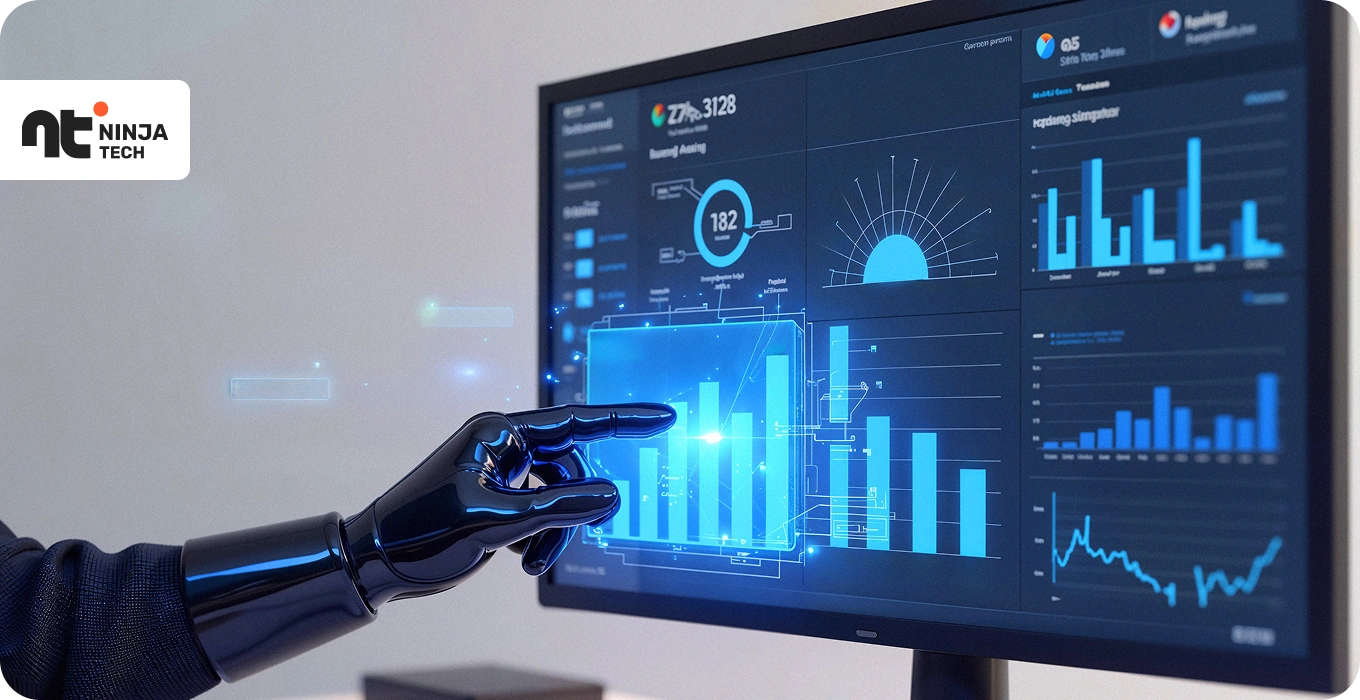
Predictive analytics and AI-powered business forecasting are helping organizations turn historical and real-time data into actionable insights. By using Artificial Intelligence and Machine Learning, businesses can identify patterns, anticipate demand, improve planning, manage risks, and support better decisions. This blog explores how AI predictive analytics works, its key business applications, benefits, challenges, and practical steps for successful implementation.
Predictive Analytics and Business Forecasting with AI
Businesses today generate more data than ever before. Every customer interaction, online transaction, marketing campaign, product order, website visit, and operational activity can produce valuable information. However, collecting data is only the beginning. The real challenge is turning that information into insights that can support better business decisions.
This is where Predictive Analytics and Business Forecasting with AI are becoming increasingly important.
Traditional business reporting generally focuses on understanding what has already happened. Businesses look at previous sales, revenue, customer activity, inventory levels, and operational performance to evaluate their current position.
Predictive analytics takes this process a step further. Instead of looking only at historical results, it uses data, statistical techniques, Artificial Intelligence (AI), and Machine Learning (ML) to identify patterns and estimate what could happen in the future.
For example, an organization may use AI to forecast product demand, identify customers who may leave, predict equipment maintenance requirements, estimate sales, detect potentially fraudulent transactions, or understand which leads are more likely to convert.
When implemented correctly, AI business forecasting can provide organizations with an additional layer of intelligence for planning, risk management, and decision-making.
What Is Predictive Analytics?
Predictive analytics is the process of analyzing historical and current data to identify patterns and generate predictions about potential future outcomes.
It can use techniques such as:
- Statistical analysis
- Machine Learning
- Regression models
- Classification algorithms
- Time-series forecasting
- Pattern recognition
- Data mining
- Neural networks
For example, a retail business may analyze several years of sales data along with seasonal patterns, promotions, customer behavior, and other relevant factors.
A predictive model can then estimate future demand for particular products.
It is important to understand that predictive analytics does not provide a guaranteed view of the future. Instead, it produces predictions based on available data and identified patterns.
The quality of those predictions depends on factors such as data quality, model design, business conditions, and changes in customer or market behavior.
What Is Business Forecasting With AI?
Business forecasting is the process of estimating future business conditions using historical information, current data, market indicators, and analytical methods.
Traditional forecasting may rely heavily on spreadsheets, historical averages, manual assumptions, and expert judgment.
AI-powered business forecasting can extend this approach by analyzing larger and more complex datasets.
For example, an AI forecasting system could consider:
- Historical sales
- Customer demand
- Seasonal trends
- Pricing changes
- Marketing campaigns
- Product availability
- Economic indicators
- Website traffic
- Customer behavior
- Regional performance
Machine Learning models can identify relationships between these variables and future outcomes.
This allows businesses to create more dynamic forecasting processes rather than relying exclusively on static historical assumptions.
How AI Predictive Analytics Works
Although implementation varies between organizations, an AI predictive analytics process typically involves several stages.
1. Data Collection
The first step is gathering relevant information from business systems.
Data may come from:
- CRM systems
- ERP platforms
- E-commerce platforms
- Financial systems
- Websites
- Mobile applications
- Marketing platforms
- Customer support systems
- IoT devices
- External data sources
The objective is to create a reliable dataset that represents the business problem being analyzed.
2. Data Preparation
Raw business data is rarely ready for immediate analysis.
It may contain duplicate records, missing information, inconsistent formats, outdated values, or irrelevant fields.
Data preparation involves cleaning and organizing the information so that it can be used effectively by analytical models.
3. Pattern Identification
AI and Machine Learning algorithms analyze historical data to identify relationships and patterns.
For example, a model might identify that demand for a particular product increases during specific periods or that certain customer behaviors are associated with a higher probability of churn.
4. Model Development
A predictive model is developed using relevant algorithms and historical data.
The model is then tested against data that was not used during training to evaluate how well it performs.
5. Prediction
Once validated, the model can generate predictions based on new or updated information.
For example, it might forecast next month’s demand or identify customers who show characteristics associated with potential churn.
6. Continuous Improvement
Business environments change over time. Customer behavior, market conditions, product offerings, and economic factors can all change.
Therefore, predictive models may need to be monitored, evaluated, and updated regularly to remain useful.
Key Applications of Predictive Analytics in Business
Predictive analytics can be applied across many business functions.
1. Sales Forecasting
One of the most common applications is sales forecasting.
Businesses need to estimate future sales to support budgeting, staffing, inventory management, and strategic planning.
AI can analyze historical sales, customer behavior, seasonal patterns, product performance, and other relevant information to generate sales forecasts.
For example, an organization can use AI to estimate expected sales for the coming weeks or months.
Sales teams can then use these insights to support pipeline planning and resource allocation.
2. Demand Forecasting
Demand forecasting is particularly important for retail, manufacturing, distribution, and e-commerce businesses.
Too much inventory can increase storage and operational costs, while insufficient inventory can result in stock shortages and missed sales opportunities.
AI-based demand forecasting can analyze historical purchasing patterns and relevant business variables to estimate future demand.
For example, an e-commerce company may forecast demand for different products across different regions.
This can help organizations make more informed inventory and procurement decisions.
3. Customer Churn Prediction
Customer retention is important for subscription-based businesses, SaaS companies, telecommunications providers, financial services organizations, and many other industries.
Predictive analytics can analyze customer behavior to identify patterns associated with potential churn.
Relevant signals may include:
- Reduced product usage
- Lower purchase frequency
- Increased support requests
- Changes in subscription behavior
- Reduced engagement
- Account activity
Businesses can use these insights to identify customers who may require additional attention.
The prediction itself does not establish that a customer will leave. Instead, it can help businesses prioritize retention activities and investigate the underlying reasons for declining engagement.
4. Lead Scoring and Sales Conversion
Sales teams often need to determine which leads should receive attention first.
AI-powered predictive lead scoring can analyze historical customer and sales data to identify patterns associated with successful conversions.
Potential inputs can include:
- Previous interactions
- Website activity
- Industry
- Company characteristics
- Product interest
- Engagement levels
- Previous communication
Sales teams can use these insights to organize their outreach and focus resources more efficiently.
5. Financial Forecasting
Financial planning requires businesses to estimate future revenue, expenses, cash flow, and other financial indicators.
AI and Machine Learning can analyze historical financial data and relevant business variables to support forecasting.
Applications may include:
- Revenue forecasting
- Cash-flow forecasting
- Expense analysis
- Budget planning
- Financial risk analysis
- Anomaly detection
AI does not replace financial expertise, but it can provide additional analytical support for finance teams.
6. Predictive Maintenance
Manufacturing and other asset-intensive businesses can use predictive analytics to anticipate potential equipment problems.
Sensors and operational systems can generate information about:
- Temperature
- Vibration
- Operating hours
- Pressure
- Energy consumption
- Machine performance
Machine Learning models can analyze this information to identify patterns that may be associated with equipment failure or maintenance requirements.
This approach can help businesses move from purely reactive maintenance toward more proactive maintenance planning.
7. Marketing Forecasting
Marketing teams can use predictive analytics to understand campaign performance and customer behavior.
AI can help analyze:
- Customer segments
- Campaign engagement
- Conversion patterns
- Website activity
- Purchase behavior
- Historical campaign results
Businesses can use these insights to estimate potential campaign outcomes and identify customer groups that may respond differently to marketing activities.
This can support more data-driven marketing planning.
Benefits of AI Predictive Analytics for Businesses
Better Decision-Making
Predictive analytics provides businesses with additional information about potential future outcomes.
Instead of relying solely on intuition or historical reports, decision-makers can combine business expertise with data-driven predictions.
Improved Planning
Forecasting can help organizations plan inventory, staffing, budgets, production, marketing activities, and other resources.
Early Risk Identification
Predictive models can identify patterns that may indicate potential risks, giving organizations an opportunity to investigate and respond.
Improved Customer Experience
Businesses can use customer predictions to personalize experiences, identify potential service issues, and provide more relevant interactions.
Operational Efficiency
AI can reduce the amount of manual analysis required to identify patterns within large datasets.
Competitive Opportunities
Organizations that effectively use their data may identify market opportunities, customer trends, or operational improvements earlier than they could through traditional reporting alone.
Predictive Analytics vs Traditional Business Forecasting
Traditional forecasting and AI-powered forecasting are not necessarily competing approaches.
Traditional methods can be effective when businesses have relatively stable conditions, limited variables, or strong domain expertise.
AI-powered forecasting becomes particularly useful when organizations have large datasets, complex relationships, rapidly changing conditions, or many variables that are difficult to analyze manually.
The practical approach may therefore be a combination of:
Historical data + AI/ML models + domain expertise + human judgment
AI can provide predictions, while business professionals provide context and evaluate whether the predictions make sense within the organization’s specific environment.
Challenges of Implementing AI Business Forecasting
Despite its potential, predictive analytics also presents several challenges.
Data Quality
Poor-quality data can result in unreliable predictions. Businesses should establish processes for data validation, cleaning, and governance.
Changing Business Conditions
Historical patterns may not always continue into the future. Changes in customer preferences, competitors, regulations, technology, or economic conditions can affect model performance.
Model Accuracy
No predictive model is perfect. Businesses should understand the limitations and uncertainty associated with predictions.
Data Privacy and Security
Organizations need appropriate controls when predictive systems use customer, employee, financial, or other sensitive information.
Integration
Predictive analytics may need to connect with existing CRM, ERP, e-commerce, financial, or operational systems. Technical integration should therefore be considered from the beginning.
Lack of Internal Expertise
Building and maintaining predictive models may require data engineering, data science, software development, and domain expertise.
For this reason, businesses may benefit from working with experienced predictive analytics solution providers when internal resources are limited.
How Businesses Can Implement Predictive Analytics
Businesses can start with a focused use case instead of attempting to implement AI across every department simultaneously.
Step 1: Define the Business Problem
Start by identifying a specific challenge.
For example:
- Why are customers leaving?
- How much inventory will be required?
- What will sales look like next quarter?
- Which leads are most likely to convert?
Step 2: Identify Relevant Data
Determine what internal and external data is available and whether it is sufficient for the selected use case.
Step 3: Prepare the Data
Clean, organize, validate, and structure the data before developing the model.
Step 4: Develop a Predictive Model
Select an appropriate statistical or Machine Learning approach based on the business objective and available data.
Step 5: Test and Validate
Evaluate the model using appropriate performance metrics and data that was not used to train it.
Step 6: Integrate With Business Workflows
Predictions are most valuable when they are available where employees make decisions.
For example, customer churn predictions could be integrated into a CRM platform rather than existing only in a separate analytics dashboard.
Step 7: Monitor Performance
Business conditions change, so organizations should continuously monitor model performance and update models when necessary.
The Future of AI-Powered Business Forecasting
The future of AI predictive analytics is likely to involve increasingly integrated and intelligent business systems.
Generative AI can make analytical insights easier to access by allowing business users to interact with data using natural language.
Instead of manually creating multiple reports, a manager could potentially ask an AI system questions such as:
“What factors contributed to the decline in sales this quarter?”
“Which regions are expected to have the highest demand next month?”
AI systems can potentially combine predictive models with business data and present insights in a more accessible format.
AI agents may also expand this capability by connecting forecasting systems with approved business applications and workflows.
For example, a future forecasting workflow could involve analyzing demand, identifying a potential inventory shortage, notifying the relevant team, and initiating an approved business process.
Such systems still require appropriate controls, validation, security, and human oversight.
Conclusion
Predictive Analytics and Business Forecasting with AI are becoming valuable tools for organizations that want to make more informed, data-driven decisions.
From sales and demand forecasting to customer churn, financial planning, predictive maintenance, marketing, and risk analysis, AI and Machine Learning can help businesses identify patterns and estimate potential future outcomes.
However, successful predictive analytics is not simply about selecting an AI model. Businesses need reliable data, clearly defined objectives, appropriate technology, strong security practices, continuous monitoring, and knowledgeable people who can interpret and act on the results.
The most effective approach is to start with a genuine business problem, develop a focused predictive analytics use case, measure its impact, and gradually expand successful solutions.
As organizations continue generating more data, AI-powered business forecasting can become an important part of modern business strategy—helping companies move beyond understanding what happened toward preparing more effectively for what could happen next.




