All Case Study

TravelSync AI: AI-Powered Real-Time Inventory Synchronization Platform for Travel Booking
An AI-powered inventory synchronization solution designed to connect hotel booking systems with an online travel marketplace, ensuring accurate room availability, pricing, and reservation information across multiple properties. The platform uses real-time data integration, intelligent mismatch detection, and predictive analytics to minimize overbooking risks, streamline booking operations, and improve customer experiences. The solution focuses on automating hotel inventory updates, synchronizing room information instantly, and providing faster resolution of booking discrepancies through AI-driven workflows and customer self-service capabilities.
Introduction
Online travel booking platforms depend on accurate and continuously updated information from multiple hotel reservation systems. Delays in synchronizing room availability and pricing can result in double bookings, incorrect checkout information, cancellations, and customer dissatisfaction.
The project addressed these operational challenges by introducing an AI-powered inventory synchronization platform for Booking.com Singapore. The solution connects hotel booking systems with the central marketplace through real-time data pipelines, automated validation, and intelligent workflows.
By combining natural language processing, AI orchestration, and predictive analytics, the platform helps maintain consistent inventory information, identify discrepancies proactively, and reduce manual intervention across booking operations.
Tech Stack
 React.js
 Node.js
 TypeScript
 Python
 MongoDB
 AWS
Key Features

Real-Time Inventory Synchronization
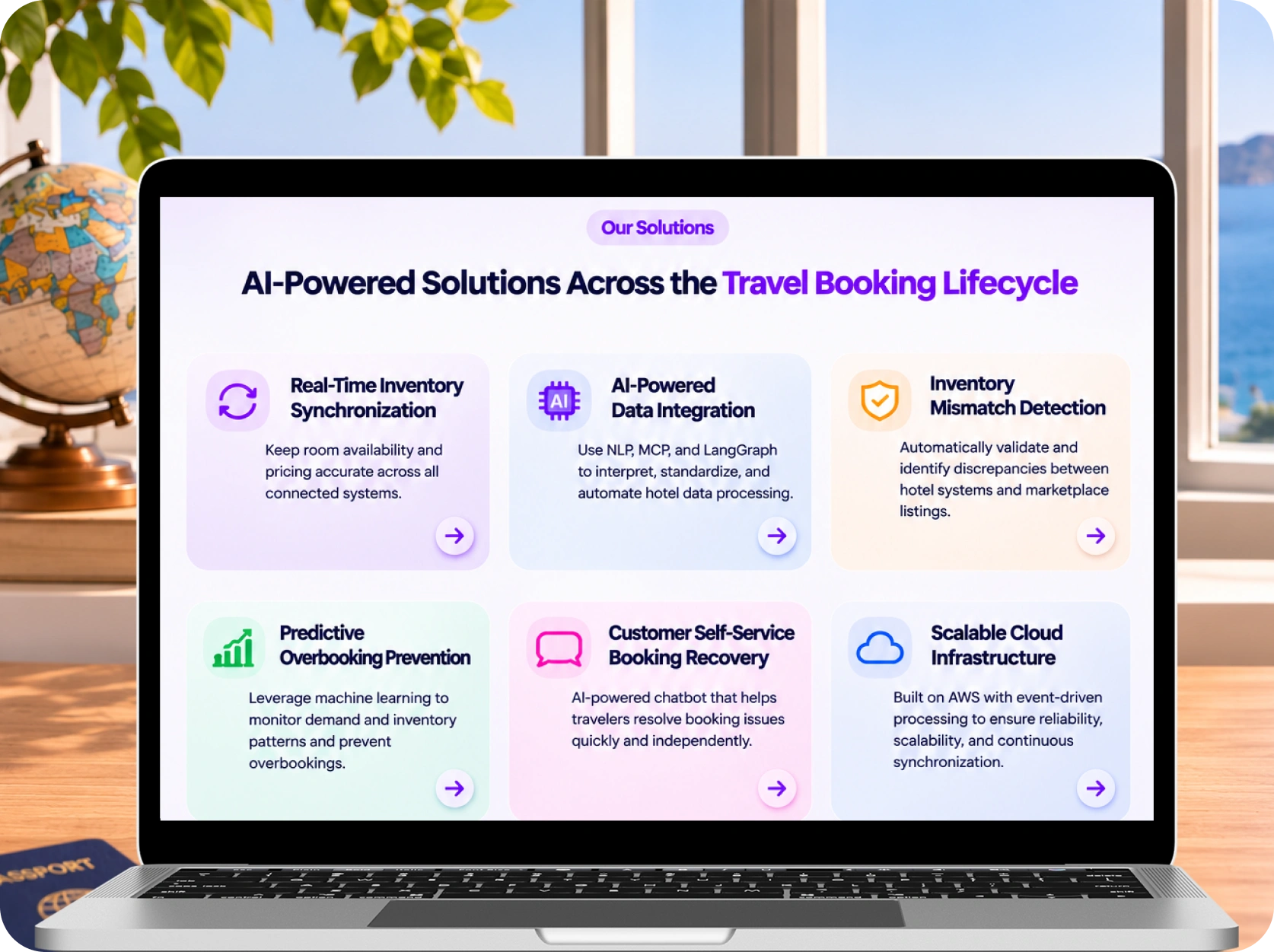
Connects multiple hotel reservation systems with the central booking platform to synchronize room availability and pricing information. Event-driven data processing ensures that inventory changes are captured and propagated without relying on periodic manual updates, helping maintain consistent information across connected systems.
AI-Powered Data Processing & Integration
Uses Natural Language Processing (NLP), Model Context Protocol (MCP), and LangGraph to interpret incoming hotel data, standardize information, and coordinate automated processing workflows. This integration helps validate incoming updates, normalize inconsistent data formats, and maintain reliable communication between connected booking systems.
Automated Inventory Mismatch Detection
Continuously compares hotel-reported inventory and pricing information against marketplace listings. Automated validation identifies discrepancies and flags inconsistent records, enabling operational teams to address potential booking issues before they affect customers.
Predictive Overbooking Prevention
Applies machine learning capabilities to monitor booking activity, room demand, and inventory consumption patterns. Predictive mechanisms identify potential overbooking situations and support preventive inventory controls, reducing the possibility of selling the same room across multiple reservations.
Customer Self-Service Booking Recovery
Provides an AI-powered chatbot experience that allows customers to access booking-related assistance using their reservation information. Customers can resolve eligible booking issues through automated workflows, reducing dependency on manual support and improving the overall booking experience.
Scalable Cloud Infrastructure & Data Management
Leverages AWS infrastructure, centralized inventory management, and event-driven data processing to support continuous synchronization across multiple hotel systems. The architecture is designed to accommodate changing booking volumes, improve data consistency, and support future platform expansion.
Challenges
-
Inconsistent Data Across Hotel Reservation Systems
Different hotels operate independent reservation platforms with varying data formats and synchronization schedules. Maintaining consistent room availability and pricing information across all connected systems was a significant operational challenge.
-
Delayed Inventory & Pricing Updates
Traditional synchronization intervals created gaps between hotel inventory changes and marketplace updates. Customers could occasionally encounter outdated availability or pricing information during the booking and checkout process.
-
Manual Overbooking Management
When multiple reservations were made against the same room inventory, resolving the issue required manual intervention from hotel staff and customer support teams. This increased operational workloads, delayed resolution, and negatively affected customer satisfaction.
-
Limited Automated Mismatch Detection
Without continuous inventory validation, discrepancies between hotel reservation systems and marketplace listings could remain undetected until customers encountered booking problems. Identifying and resolving these inconsistencies required a more proactive and automated approach.
Our Approach
-
Real-Time Data Integration & Engineering
Established direct integrations with hotel reservation systems to capture room availability and pricing changes through event-driven data processing. This approach enabled faster information exchange and reduced dependency on scheduled synchronization cycles.
-
AI-Orchestrated Data Processing
Integrated NLP, MCP, and LangGraph-based workflows to interpret hotel data feeds, standardize incoming information, and coordinate multi-step validation processes. This helped improve data consistency and streamline communication between connected systems.
-
Centralized Inventory Management
Introduced a centralized inventory synchronization layer to maintain consistent room availability and rate information across connected hotel systems and the booking marketplace. This provided a unified reference point for inventory updates and validation.
-
Predictive Analytics & Automated Validation
Applied machine learning models and automated validation mechanisms to identify inventory discrepancies and assess potential overbooking risks. Proactive detection helped minimize booking inconsistencies and supported more reliable reservation management.
-
Automated Customer Support Workflows
Implemented chatbot-based self-service capabilities to assist customers with eligible booking-related issues. Automated recovery workflows reduced reliance on manual support interactions and helped accelerate issue resolution.
Results & Impact
The AI-powered inventory synchronization solution improved the coordination of hotel reservation data and marketplace operations by introducing real-time updates, automated validation, and predictive inventory management. The platform helped reduce booking inconsistencies, improve operational efficiency, and deliver a more reliable customer booking experience.

Let’s Build Something
Exceptional
Innovify transforms ideas into impactful products, blending design and engineering from concept to scale. Through onshore and nearshore collaboration, we deliver speed, clarity, and top talent without compromise.
Visit Portfolio
See More Case Studies
Our clients speak for us! Our Clutch-verified reviews reflect our dedication to delivering top-notch solutions.