All Case Study

AirFlow360: Connecting Installation, Maintenance & Asset Operations
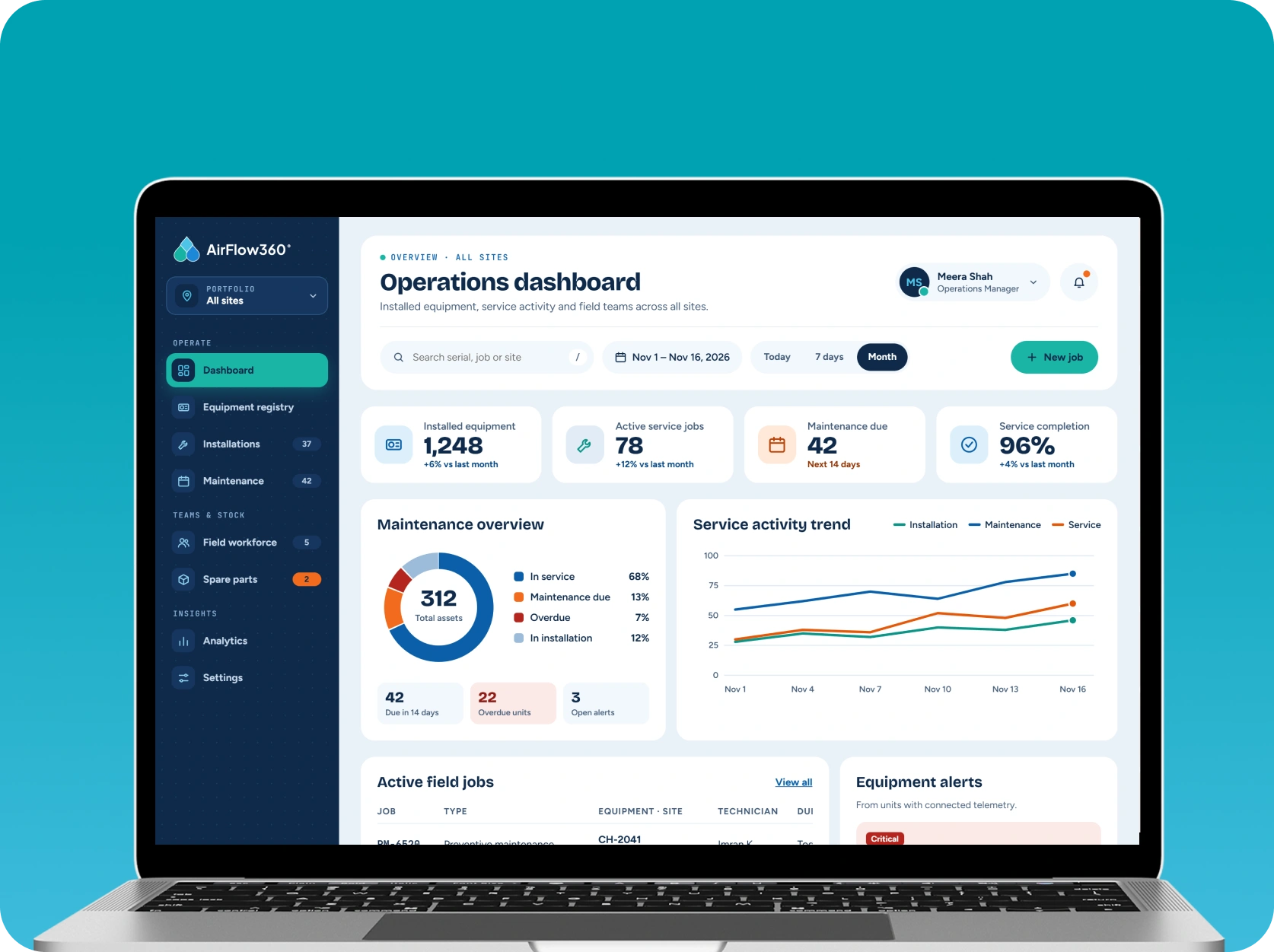
A centralized digital platform designed to help HVAC businesses manage equipment installations, commissioning activities, preventive maintenance, technician assignments, spare-parts requirements, and service operations. The solution connects field teams, operations managers, and equipment records through structured workflows, improving visibility across the complete HVAC equipment lifecycle.
Introduction
HVAC manufacturers, distributors, and service providers manage equipment throughout multiple stages, from product delivery and installation to maintenance and long-term servicing. As equipment portfolios and customer locations expand, coordinating installation schedules, technician availability, maintenance requirements, and spare-parts information can become increasingly complex.
Disconnected operational systems and manual records can make it difficult to maintain accurate equipment histories, plan maintenance activities, and coordinate field resources. Businesses need a connected environment that brings equipment information and field operations together.
To address these requirements, NinjaTech proposes AirFlow360, an HVAC equipment lifecycle and field service management platform that provides a centralized workspace for managing installed equipment, commissioning records, maintenance schedules, technician assignments, and service documentation.
The platform is designed to help HVAC businesses move beyond disconnected operational records by creating a structured view of equipment from installation through ongoing maintenance. Its modular architecture can support HVAC manufacturers, commercial cooling providers, industrial climate-control businesses, and organizations managing distributed equipment installations.
Tech Stack
 Next.js
 React Native
 NestJS
 PostgreSQL
 Google Maps API
 AWS
Key Features

Centralized HVAC Equipment Registry
The platform provides a centralized registry for managing HVAC equipment across customer locations and operational sites. Each equipment record can include model information, serial numbers, product specifications, installation details, warranty information, and assigned location.
Authorized users can access equipment histories and review important records without depending on scattered spreadsheets or disconnected systems. Equipment categorization and searchable records also help operations teams organize large portfolios of installed HVAC units.
Installation & Commissioning Management
The solution supports structured management of equipment installation and commissioning activities. Project teams can register new installations, assign technicians, maintain site details, record installation dates, and document commissioning milestones.
Digital checklists can be configured to capture required installation information, inspection observations, and commissioning records. Supporting photographs and documents can be attached to equipment profiles, creating a more organized record of completed installation activities.
Preventive Maintenance Planning
The platform enables businesses to organize preventive maintenance schedules based on equipment type, installation date, service intervals, and operational requirements.
Maintenance managers can create recurring service plans, assign upcoming activities, and monitor maintenance completion. Automated reminders can notify relevant teams when scheduled maintenance approaches or when equipment requires attention according to configured service rules.
This helps businesses plan maintenance activities proactively rather than depending entirely on reactive service requests.
Technician Scheduling & Field Workforce Coordination
A dedicated workforce management module helps operations teams coordinate technicians, service assignments, and field activities. Managers can review technician availability, allocate jobs based on location and skill requirements, and monitor assigned work.
Field technicians can access relevant equipment information, installation records, maintenance instructions, and job details through a mobile-friendly interface. They can update task progress and submit service documentation from the field, improving coordination between technicians and back-office teams.
Spare Parts & Service Resource Management
The platform supports structured tracking of spare parts and service materials required for HVAC maintenance activities. Businesses can maintain part records, monitor stock availability, and associate required components with equipment models or scheduled service tasks.
Service teams can record parts consumed during maintenance and identify materials that need replenishment. This provides better visibility into service resource requirements and helps operations managers coordinate inventory with planned field activities.
Equipment Performance & Operational Analytics
An administrative dashboard provides visibility into equipment records, installation progress, maintenance schedules, technician workloads, service completion, and spare-parts usage.
Where supported by connected equipment and available telemetry, the platform can also display selected operating indicators and equipment alerts. Historical records and reporting can help managers identify recurring maintenance patterns, review asset performance, and plan operational improvements.
Challenges
-
Scattered Equipment Information
Equipment specifications, installation records, warranty details, and maintenance histories can be maintained across different systems and documents. A centralized equipment registry was needed to improve information accessibility and maintain consistent asset records.
-
Unstructured Installation & Commissioning Processes
Installation activities involve multiple tasks, technical checks, and documentation requirements. Without standardized workflows, businesses may find it difficult to monitor installation progress and maintain complete commissioning records.
-
Reactive Maintenance Planning
Depending on manual reminders and individual follow-ups can make preventive maintenance difficult to coordinate across large equipment portfolios. A structured scheduling mechanism was required to organize recurring maintenance activities.
-
Field Workforce Coordination
Technician availability, geographical locations, job requirements, and service schedules need to be considered when assigning field activities. Limited visibility into these details can create coordination difficulties and inefficient resource allocation.
-
Spare-Parts & Service Resource Visibility
Service activities depend on the availability of appropriate spare parts and materials. Disconnected inventory and service records can make it difficult to plan resource requirements and track parts consumed during field work.
Our Approach
-
Business Requirement Analysis & Equipment Lifecycle Mapping
NinjaTech’s proposed approach begins with understanding HVAC equipment categories, installation processes, commissioning requirements, maintenance procedures, technician responsibilities, and spare-parts workflows.
These requirements are translated into functional modules and process maps covering the equipment lifecycle. This creates a clear implementation roadmap aligned with the operational needs of the business.
-
Centralized Equipment Data Architecture
A structured data architecture is planned to connect equipment profiles, customer locations, installation records, warranties, maintenance histories, and service documentation.
The approach establishes relationships between equipment and its operational activities, allowing authorized users to access relevant information through a unified platform.
-
Installation & Maintenance Workflow Development
Configurable workflows are designed for installation registration, commissioning checklists, preventive maintenance scheduling, and service task completion.
Status tracking, task assignments, and automated reminders help organize activities across operations teams and field technicians while maintaining a consistent record of completed work.
-
Mobile Field Service & Resource Coordination
The field service experience is designed to provide technicians with mobile access to assigned jobs, equipment information, service instructions, and digital documentation.
Workforce scheduling and spare-parts records are connected with service activities to help managers coordinate field resources and monitor task progress.
-
System Integration, Security & Quality Assurance
The platform can integrate with relevant ERP, inventory, customer management, mapping, and connected-equipment systems through available APIs and supported protocols.
Testing covers equipment records, workflow transitions, user permissions, notifications, mobile functionality, data synchronization, and integration reliability. Security controls are incorporated according to the project’s data and access requirements.
-
Cloud Deployment & Continuous Optimization
The solution can be deployed using cloud infrastructure designed to support growing equipment portfolios and distributed field operations. Monitoring, backup planning, and controlled release processes support ongoing platform maintenance.
Feedback from operations managers and field technicians can guide future enhancements, additional integrations, and improvements to equipment lifecycle workflows.
Results & Impact
AirFlow360 establishes a connected digital environment for managing equipment information and coordinating installation, commissioning, maintenance, and field service activities.
By bringing equipment records, service schedules, technician assignments, spare-parts information, and operational reporting into one platform, the solution is designed to reduce fragmented record management and improve coordination between field and administrative teams.
A centralized equipment history can help businesses maintain better visibility into installed assets, while structured maintenance planning supports more organized service scheduling. Mobile access to job information and digital documentation can also help technicians complete field activities with clearer operational context.
The platform is designed to deliver the following business benefits:
-
Centralized Equipment Records
Organizes HVAC product details, installation information, warranty records, and maintenance histories in one environment.
-
Structured Installation Management
Provides standardized workflows for installation activities and commissioning documentation.
-
Proactive Maintenance Planning
Helps businesses coordinate recurring maintenance schedules and service reminders.
-
Improved Field Workforce Coordination
Supports technician scheduling, job allocation, and mobile access to service information.
-
Better Spare-Parts Visibility
Connects service activities with spare-parts records and resource requirements.
-
Equipment Performance Insights
Provides operational reporting and, where connected telemetry is available, visibility into selected equipment indicators.
-
Scalable Service Operations
Establishes a modular foundation for managing growing equipment portfolios, customer locations, and field teams.

Let’s Build Something
Exceptional
Innovify transforms ideas into impactful products, blending design and engineering from concept to scale. Through onshore and nearshore collaboration, we deliver speed, clarity, and top talent without compromise.
Visit Portfolio
See More Case Studies
Our clients speak for us! Our Clutch-verified reviews reflect our dedication to delivering top-notch solutions.