All Case Study

HaulGrid: Optimizing Transportation & Delivery Management
A comprehensive fleet and logistics operations platform designed to improve transportation planning, coordinate delivery activities, and provide centralized visibility into fleet resources. The solution brings vehicle allocation, dispatch planning, route coordination, delivery documentation, service scheduling, and operational analytics into a unified digital environment. By connecting transportation activities with business workflows, the platform helps logistics organizations improve resource utilization, coordinate deliveries, and make informed operational decisions.
Introduction
Managing transportation operations across multiple vehicles, delivery schedules, and customer locations requires continuous coordination between dispatch teams, drivers, and logistics administrators. Disconnected planning tools and manual coordination can create scheduling conflicts, inefficient vehicle allocation, delayed deliveries, and limited visibility into ongoing transportation activities.
The objective was to conceptualize HaulGrid, a centralized fleet and logistics operations platform that simplifies transportation planning and resource coordination. The solution was designed to help organizations manage vehicle availability, allocate transportation resources, organize delivery schedules, coordinate routes, and monitor shipment progress through a unified system. It also required a flexible architecture capable of supporting multiple vehicle categories, operational locations, delivery workflows, and business reporting requirements.
Tech Stack
 Next.js
 React Native
 NestJS
 PostgreSQL
 Mapbox
 AWS
Key Features

Centralized Fleet & Vehicle Resource Management
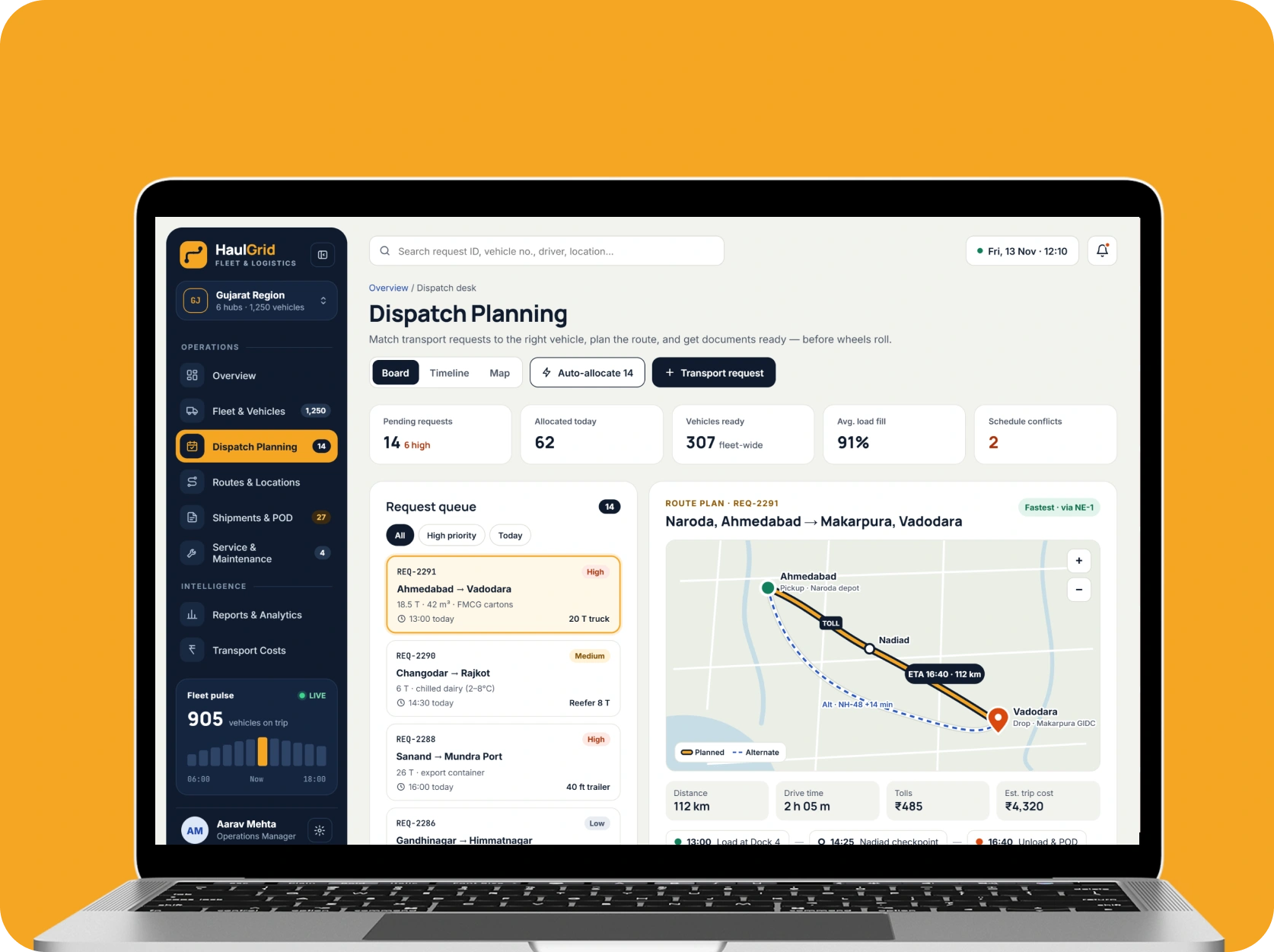
Designed a centralized fleet management module that allows logistics administrators to organize vehicles, maintain vehicle profiles, and monitor resource availability. Each vehicle record can include registration information, vehicle category, carrying capacity, operational status, assigned location, and associated documentation. The system provides a consolidated view of available and allocated resources, helping organizations coordinate fleet utilization across different transportation operations.
Intelligent Dispatch Planning & Vehicle Allocation
Introduced a structured dispatch management environment to organize transportation requests, assign vehicles, and coordinate delivery schedules. The platform can consider vehicle availability, carrying capacity, delivery requirements, and operational priorities when organizing assignments. Dispatch teams can manage upcoming transportation activities through centralized scheduling interfaces, improving coordination between resource allocation and delivery execution.
Route Planning & Delivery Coordination
Integrated geospatial capabilities to support route visualization, delivery location management, and transportation planning. Interactive mapping functionality helps dispatch teams review delivery destinations, organize planned routes, and understand geographical relationships between operational locations. The platform also provides a foundation for managing route updates and coordinating delivery activities when schedules or transportation requirements change.
Digital Shipment & Delivery Documentation
Developed a centralized shipment documentation workflow to organize delivery requests, shipment details, supporting documents, and proof-of-delivery records. Authorized users can maintain delivery-related information, upload supporting files, and update shipment progress through structured workflows. Digital documentation helps reduce dependency on disconnected records and provides a more organized information trail across transportation activities.
Service Scheduling & Fleet Availability Management
Created a vehicle service management module to organize inspection schedules, maintenance appointments, repair records, and service-related activities. The system can track vehicle availability and highlight resources that are temporarily unavailable due to planned servicing or operational issues. Centralized service records help fleet administrators coordinate vehicle readiness and make better resource allocation decisions.
Operational Analytics & Performance Dashboard
Designed an analytics dashboard that consolidates fleet utilization, dispatch activities, delivery progress, transportation expenses, and operational trends. Reporting capabilities allow administrators to review vehicle allocation patterns, delivery completion records, resource availability, and cost-related information. These insights provide a foundation for identifying operational bottlenecks and improving transportation planning decisions.
Challenges
-
Fragmented Fleet & Transportation Information
Managing vehicle information, delivery requests, schedules, and transportation records across disconnected systems can create operational visibility gaps. Establishing a centralized information environment required structured data management and unified fleet administration workflows.
-
Complex Dispatch Planning & Resource Allocation
Allocating vehicles according to capacity, availability, delivery priorities, and geographical requirements can become difficult as transportation operations expand. The platform needed flexible scheduling and assignment workflows to support more organized dispatch planning.
-
Delivery Coordination & Location Visibility
Coordinating transportation activities across different destinations requires accurate location information and timely communication between dispatch teams and drivers. Integrating geospatial capabilities and centralized delivery tracking was important for improving operational visibility.
-
Vehicle Availability & Service Coordination
Unexpected vehicle unavailability and disconnected maintenance records can affect transportation planning. Managing service schedules alongside fleet allocation required a structured approach to vehicle availability, inspection records, and maintenance activities.
-
Operational Reporting & Cost Management
Limited visibility into vehicle utilization, delivery progress, and transportation expenses can make it difficult to evaluate operational efficiency. Centralized reporting and analytics were required to organize business information and support more informed management decisions.
Our Approach
-
Requirement Analysis & Platform Architecture
Established a modular architecture around fleet management, dispatch planning, route coordination, shipment documentation, service scheduling, and operational reporting. Defined the primary user roles and transportation workflows to create a flexible foundation capable of supporting different vehicle categories, locations, and delivery requirements.
-
Frontend & Backend Application Development
Focused on developing an intuitive web application using React.js, Next.js, and TypeScript, supported by backend services using Node.js and NestJS. Structured application modules and REST APIs to connect fleet records, transportation requests, dispatch assignments, delivery updates, and administrative workflows.
-
Geospatial Integration & Real-Time Coordination
Planned the integration of Mapbox and PostGIS to support geographical data management, route visualization, and location-based transportation planning. WebSockets and Socket.IO provide a proposed communication layer for real-time application updates between dispatch interfaces and connected users.
-
Cloud Infrastructure, Security & Quality Assurance
Selected AWS infrastructure, Docker, and Nginx as the proposed deployment foundation. Incorporated authentication and access management using JWT and OAuth 2.0, alongside AWS S3 for document storage. Emphasized functional testing, API validation, mapping verification, workflow testing, and performance assessments to support reliable platform operations.
Results & Impact
HaulGrid establishes a centralized foundation for coordinating transportation resources, delivery activities, and fleet administration. By connecting vehicle management, dispatch planning, route coordination, shipment documentation, and service scheduling, the solution creates a more organized approach to logistics operations.
The integrated platform provides a structured environment for managing fleet availability, transportation assignments, delivery progress, and operational information. Centralized dashboards and reporting capabilities also create opportunities for improved resource utilization, better delivery coordination, and more informed operational planning.
Key expected business benefits include:
-
Improved Fleet Utilization
Provides centralized visibility into vehicle availability, allocation, and transportation resources.
-
Streamlined Dispatch Operations
Organizes vehicle assignments and delivery schedules through structured planning workflows.
-
Better Delivery Coordination
Supports geographical planning and centralized visibility into transportation activities.
-
Digital Documentation Management
Simplifies the organization and retrieval of shipment records and delivery-related documents.
-
Proactive Vehicle Management
Organizes service schedules, inspection records, and vehicle availability information.
-
Data-Driven Operations
Provides operational dashboards and reporting to support transportation planning and cost analysis.
-
Scalable Logistics Infrastructure
Establishes a flexible technical foundation for additional vehicles, locations, transportation workflows, and business integrations.

Let’s Build Something
Exceptional
Innovify transforms ideas into impactful products, blending design and engineering from concept to scale. Through onshore and nearshore collaboration, we deliver speed, clarity, and top talent without compromise.
Visit Portfolio
See More Case Studies
Our clients speak for us! Our Clutch-verified reviews reflect our dedication to delivering top-notch solutions.