All Case Study

Tessera: Enterprise Identity & Access Management Platform
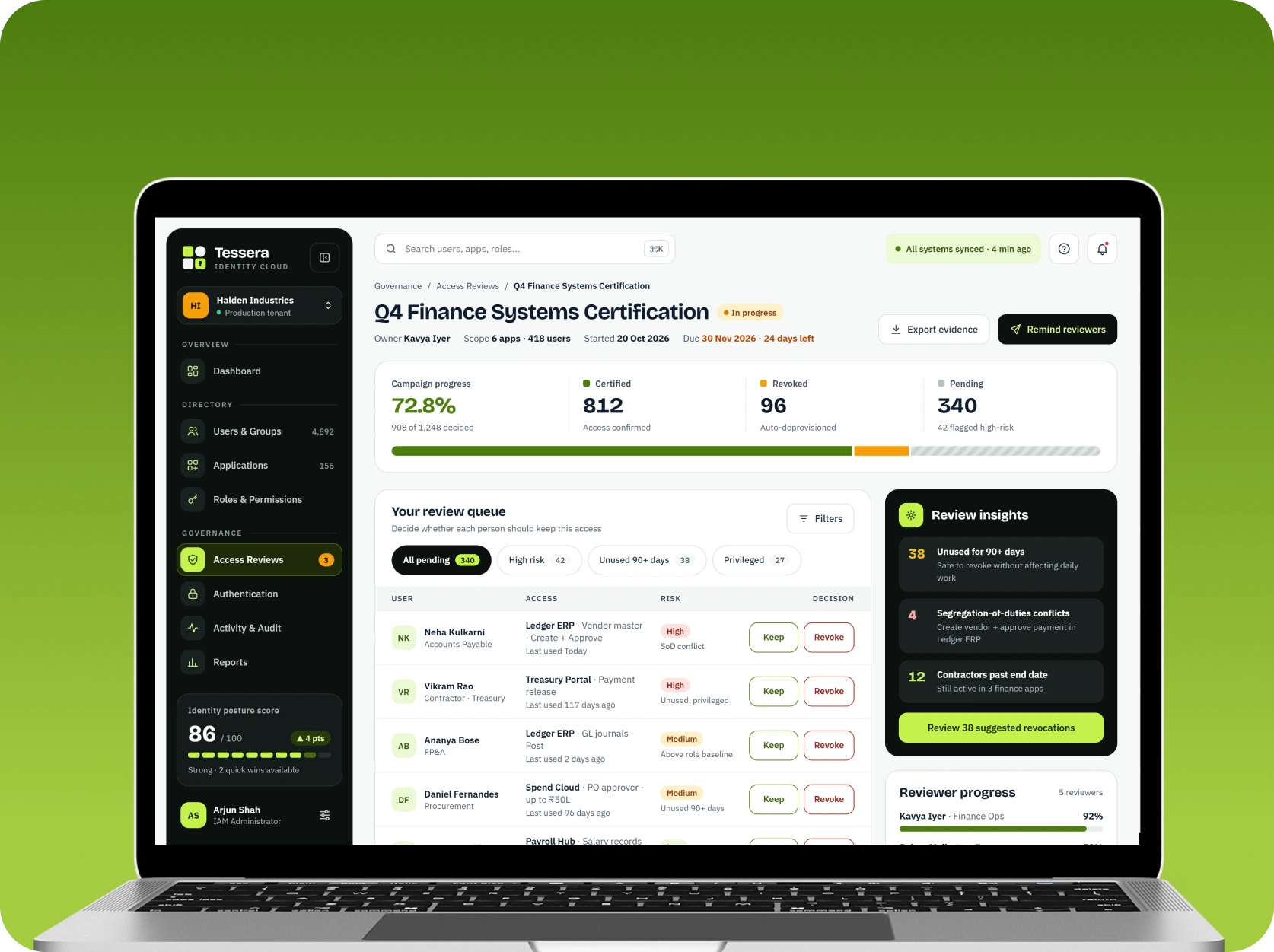
A centralized enterprise identity management solution designed to simplify workforce identity administration, strengthen application access security, and streamline user lifecycle operations. The platform brings identity provisioning, authentication, access governance, permission management, and security monitoring into a unified environment, helping organizations maintain better control over employee access across cloud-based and internal business applications.
Introduction
As organizations expand their digital infrastructure, managing employee identities, application permissions, and access privileges across multiple business systems becomes increasingly complex. Disconnected identity directories, manual onboarding processes, inconsistent permission assignments, and limited access visibility can create operational inefficiencies and security vulnerabilities.
Tessera addresses these challenges through a centralized identity administration ecosystem. It enables organizations to manage workforce identities, automate user provisioning, control application access, enforce authentication policies, and monitor identity-related activities from a unified interface. The solution is designed to simplify identity lifecycle management while helping IT administrators maintain consistent access policies, improve security oversight, and support compliance requirements across their digital environments.
Tech Stack
 React.js
 NestJS
 PostgreSQL
 Keycloak
 OpenID Connect
 Microsoft Azure
Key Features

Centralized Identity Administration
Provides a unified workspace for managing employee identities, user accounts, organizational groups, and access-related information across connected business applications. Administrators can create, update, deactivate, and organize user profiles while maintaining a centralized view of identity records. This functionality helps reduce fragmented administration and provides better visibility into workforce identity management.
Automated User Provisioning & Deprovisioning
Streamlines employee onboarding, role changes, and offboarding through structured identity lifecycle workflows. User accounts and application access can be assigned or revoked based on organizational roles, departments, and predefined policies. Automated provisioning helps reduce repetitive administrative activities, while timely deprovisioning supports better control over inactive and unauthorized accounts.
Single Sign-On & Multi-Factor Authentication
Simplifies application access through centralized authentication and Single Sign-On capabilities. Users can access authorized business applications through a unified authentication experience using supported identity protocols. Multi-Factor Authentication adds another verification layer, helping organizations strengthen account protection and reduce risks associated with compromised credentials.
Role-Based Access & Permission Management
Enables administrators to define roles, assign permissions, and manage application access according to employee responsibilities. Access policies can be organized around departments, job functions, and organizational structures. This functionality supports consistent permission management and helps organizations implement least-privilege access principles across their digital environments.
Identity Governance & Access Reviews
Provides structured access review workflows to help organizations evaluate existing user permissions and identify unnecessary or outdated access privileges. Administrators and designated managers can review access assignments, validate permissions, and initiate corrective actions. Centralized governance records also help maintain visibility into access decisions and support internal compliance processes.
Identity Activity Monitoring & Audit Reporting
Maintains visibility into identity-related events, including authentication attempts, account modifications, permission changes, access requests, and administrative activities. Centralized activity records and reporting capabilities help IT teams investigate unusual behavior, review access histories, and maintain traceability across identity management operations.
Challenges
-
Fragmented Identity Management Across Applications
Managing employee accounts across multiple cloud platforms, internal applications, and organizational directories creates administrative complexity. The client required a centralized approach to maintain consistent identity records and improve visibility across connected systems.
-
Manual User Lifecycle Administration
Traditional onboarding, role-change, and employee exit processes often involve repetitive account creation, permission updates, and access revocation activities. These manual workflows can introduce delays and increase the possibility of inconsistent access assignments.
-
Inconsistent Authentication & Access Policies
Different applications may implement separate authentication mechanisms and permission structures. Maintaining consistent access policies across the organization’s digital ecosystem requires centralized authentication and structured authorization management.
-
Limited Access Visibility & Governance
Without centralized access reviews and activity records, organizations may struggle to identify unnecessary permissions, inactive accounts, and unusual identity-related activities. Better governance and audit visibility are essential for maintaining controlled application access.
Our Approach
-
Identity Architecture & Requirement Assessment
Evaluated organizational identity requirements, existing authentication environments, application dependencies, user roles, and access management workflows. Based on these requirements, we designed a centralized identity management architecture focused on supporting scalable user administration, secure authentication, and integration with existing business applications.
-
Centralized Identity Integration & Automation
Established an identity integration approach to connect workforce accounts, organizational directories, and business applications through standardized APIs and identity protocols. Structured provisioning and deprovisioning workflows were designed to simplify account lifecycle operations and improve consistency across connected systems.
-
Authentication & Access Governance Implementation
Designed authentication and authorization workflows incorporating Single Sign-On, Multi-Factor Authentication, role-based permissions, and access review capabilities. The approach focused on providing secure application access while helping administrators maintain control over user privileges and identity-related activities.
-
Security Validation & Cloud Deployment
Structured the application deployment and validation process around authentication reliability, permission enforcement, API security, audit logging, and application performance. Cloud infrastructure and deployment automation were considered to support platform availability, secure configuration management, and future scalability.
Results & Impact
Tessera establishes a centralized framework for managing workforce identities, application authentication, and organizational access permissions. By bringing identity administration, user lifecycle workflows, access governance, and security monitoring into one ecosystem, the solution provides a structured approach to enterprise identity operations.
The platform’s architecture creates a foundation for simplifying user administration, improving access visibility, and maintaining consistent authentication policies across connected business applications. Its centralized governance capabilities also support better accountability, streamlined access reviews, and more organized identity-related audit activities.
Business Benefits:
- Centralized management of employee identities and application accounts
- More efficient user onboarding, role changes, and offboarding workflows
- Simplified application authentication through Single Sign-On
- Stronger account protection through Multi-Factor Authentication
- Consistent access permissions through role-based access management
- Improved visibility into user activities and application access
- Structured identity governance and access review processes
- Scalable architecture for integrating additional enterprise applications

Let’s Build Something
Exceptional
Innovify transforms ideas into impactful products, blending design and engineering from concept to scale. Through onshore and nearshore collaboration, we deliver speed, clarity, and top talent without compromise.
Visit Portfolio
See More Case Studies
Our clients speak for us! Our Clutch-verified reviews reflect our dedication to delivering top-notch solutions.