All Case Study

VoltSync: EV Charging Network Deployment & Service Management Platform
A centralized digital platform designed to simplify EV charger deployment, monitor charging infrastructure, coordinate field maintenance, and improve network reliability through connected operations and real-time insights.
Introduction
As electric vehicle adoption continues to grow, charging infrastructure providers must manage an expanding network of charging stations, installation projects, service teams, and operational requirements. Coordinating charger installations, monitoring equipment availability, resolving technical issues, and maintaining service quality across multiple locations can become increasingly complex when these activities rely on disconnected systems and manual processes.
VoltSync is designed to bring these operational activities into one connected environment. It enables businesses to manage charging station locations, oversee installation and commissioning activities, monitor charger health, coordinate maintenance requests, and track service performance. With centralized infrastructure records, automated notifications, and operational analytics, the platform helps charging network operators improve service coordination, minimize operational delays, and maintain a more reliable charging experience.
Tech Stack
 Next.js
 React Native
 NestJS
 PostgreSQL
 OCPP
 AWS
Key Features

EV Charging Station Network Management
Provides a centralized interface for managing EV charging stations across multiple locations. Administrators can maintain station profiles containing location details, charger specifications, connector types, installation information, operational status, and service history. Interactive maps help teams view distributed charging infrastructure and identify station availability, maintenance requirements, and deployment progress from one dashboard.
Charger Installation & Commissioning Management
Streamlines the process of deploying new charging stations through structured installation and commissioning workflows. Project teams can manage site information, installation milestones, assigned contractors, inspection requirements, commissioning checklists, and deployment documentation. Digital status updates provide visibility into installation progress and help ensure that required activities are completed before a charging station becomes operational.
Real-Time Charger Monitoring & Status Tracking
Enables charging network operators to monitor charger connectivity, operational status, charging sessions, and device-related events through connected monitoring capabilities. Integration with compatible charging equipment and communication protocols can provide information about charger availability, faults, and operational interruptions. Centralized monitoring helps teams identify service issues and prioritize investigation based on operational impact.
Maintenance & Service Request Management
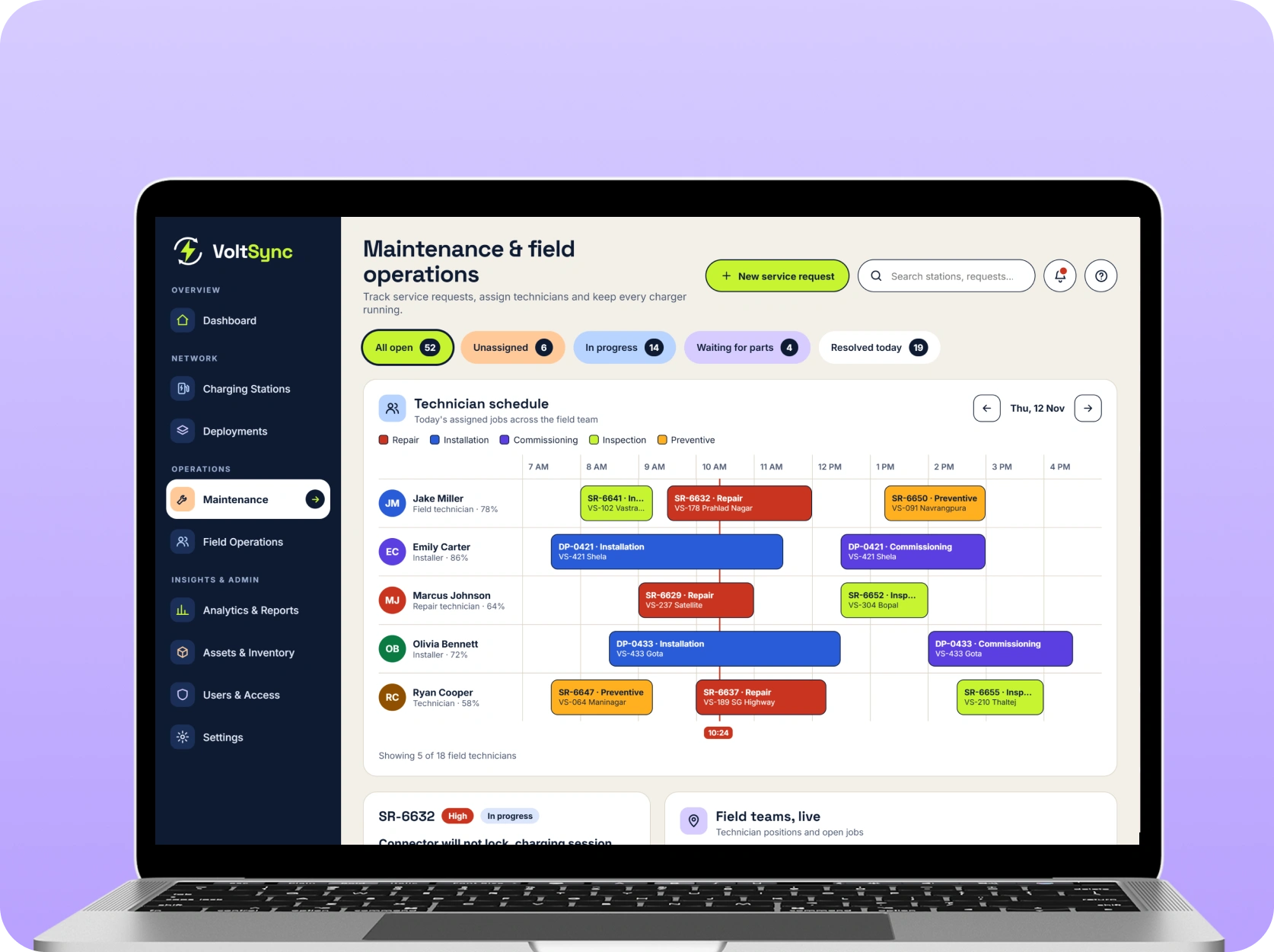
Digitizes maintenance activities by allowing operators and authorized users to report equipment issues, create service requests, and track resolution progress. Managers can assign maintenance tasks to technicians, define priorities, monitor response status, and maintain service histories for individual charging stations. Automated notifications and structured work order workflows help improve coordination between support teams and field technicians.
Field Technician & Service Operations Coordination
Provides field technicians with mobile access to assigned service requests, charger information, site locations, maintenance instructions, and inspection records. Technicians can update job progress, record diagnostic findings, upload images, and submit completion reports. Managers gain better visibility into technician assignments, pending jobs, and service activity across geographically distributed charging locations.
Network Performance Analytics & Reporting
Offers operational dashboards and reports covering charger availability, station uptime, charging activity, service requests, maintenance performance, and installation progress. Historical data can help operators identify recurring equipment issues, understand service trends, compare station performance, and plan infrastructure improvements. These insights support informed decisions about maintenance priorities, network expansion, and operational resource allocation.
Challenges
-
Managing Distributed Charging Infrastructure
As charging networks expand across multiple locations, maintaining accurate information about stations, chargers, installation status, and equipment condition becomes increasingly challenging. Disconnected records can limit visibility and make it difficult for operators to understand the operational status of their complete infrastructure network.
-
Limited Visibility Into Charger Performance
Monitoring charger connectivity, availability, and technical issues across different devices requires consistent data collection and integration. Without a centralized monitoring environment, operational teams may struggle to identify equipment interruptions, understand recurring faults, and prioritize service requirements.
-
Complex Installation & Commissioning Coordination
Deploying charging stations involves coordination between site owners, installation contractors, technical teams, and network operators. Managing installation milestones, documentation, inspections, and commissioning approvals through manual processes can create delays and reduce project visibility.
-
Inefficient Maintenance & Field Service Management
Resolving charger issues across geographically distributed locations requires effective communication between support teams, technicians, and infrastructure operators. Manual service assignments, delayed status updates, and fragmented maintenance histories can affect response coordination and make it difficult to track service performance.
Our Approach
-
Infrastructure Assessment & Platform Architecture
The project approach began with identifying the operational requirements associated with EV charging station deployment, device monitoring, maintenance coordination, and network administration. A modular platform architecture was planned to support centralized infrastructure records, location-based station management, user permissions, and integration with compatible charging systems.
-
Charging Network Management & Integration
A centralized charging infrastructure management layer was designed to organize station profiles, charger specifications, site information, installation records, and operational status. Integration capabilities using standard APIs and compatible charging communication protocols were considered to support charger data exchange and provide a unified view of network operations.
-
Digital Installation & Field Service Workflows
Structured workflows were planned for installation tracking, commissioning activities, maintenance requests, technician assignments, and service completion. A mobile-friendly experience was designed to help field teams access site details, update task progress, submit inspection information, and maintain digital service records.
-
Monitoring, Analytics & Platform Optimization
The proposed platform incorporated centralized dashboards, operational reporting, and monitoring capabilities to support charger availability tracking and service performance analysis. Security controls, integration testing, cloud infrastructure, and performance optimization were considered to establish a scalable foundation for managing a growing EV charging network.
Results & Impact
VoltSync creates a connected operational environment for managing charging infrastructure throughout its deployment and service lifecycle. By centralizing station information, installation workflows, charger monitoring, and maintenance activities, the platform helps organizations improve visibility across distributed charging networks.
Digital installation and commissioning workflows provide teams with a structured way to coordinate deployment activities and monitor project progress. Connected charger monitoring capabilities help operators identify operational interruptions, while centralized maintenance workflows make it easier to assign service requests, coordinate technicians, and maintain equipment service histories.
Operational dashboards and historical reporting further support network performance analysis by providing insights into station availability, charging activity, maintenance requirements, and service trends. Together, these capabilities establish a scalable foundation for EV infrastructure operators seeking to improve network oversight, strengthen service coordination, and support the continued expansion of electric mobility infrastructure.
Business Benefits:
-
Centralized Network Visibility
Manage charging stations, charger details, site information, and operational status through one platform.
-
Organized Infrastructure Deployment
Coordinate installation projects, commissioning activities, documentation, and deployment milestones.
-
Improved Charger Monitoring
Gain better visibility into charger connectivity, operational status, and equipment-related events.
-
Streamlined Maintenance Operations
Digitize service requests, technician assignments, maintenance updates, and service histories.
-
Better Field Team Coordination
Connect operations managers and field technicians through shared job information and mobile workflows.
-
Data-Driven Network Planning
Use performance dashboards and historical insights to support maintenance planning and charging infrastructure expansion.

Let’s Build Something
Exceptional
Innovify transforms ideas into impactful products, blending design and engineering from concept to scale. Through onshore and nearshore collaboration, we deliver speed, clarity, and top talent without compromise.
Visit Portfolio
See More Case Studies
Our clients speak for us! Our Clutch-verified reviews reflect our dedication to delivering top-notch solutions.